

 Cartoon Studies on Twitter
 Cartoon Studies on Flickr
 Get the latest news
Industry Day is the time of year when a group of comics industry professionals outside the art side come to talk to the students at The Center for Cartoon Studies. This year, we had Bill Boichel, Tracy Hurren, Jennifer Linnan, and Joan Hilty.
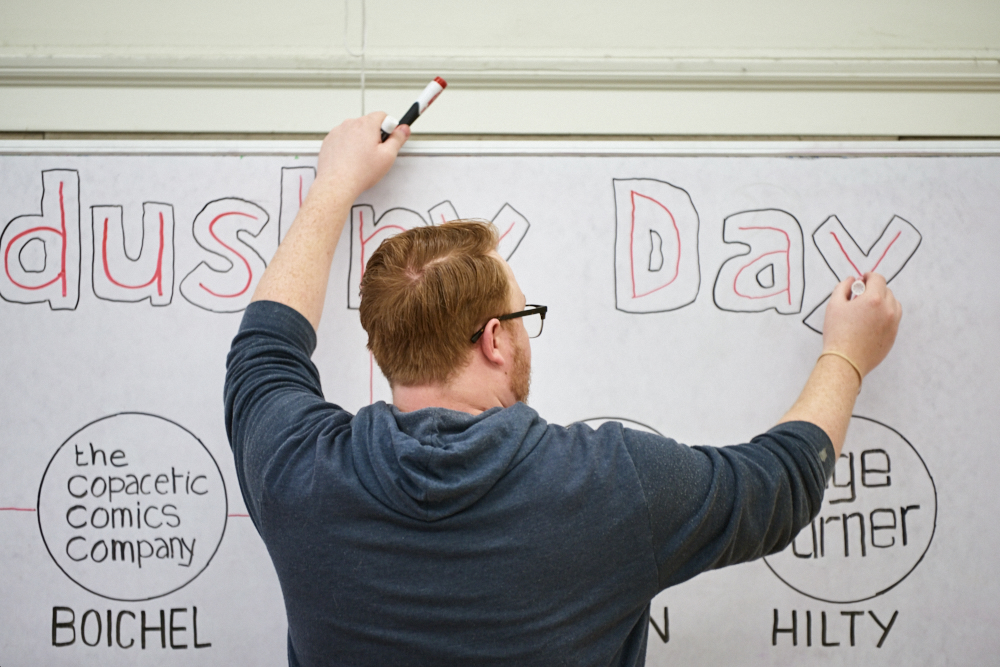
Luke still working on the sign!
Bill is from Copacetic Comics in Pittsburgh, PA, and moderated the panel. His comic store specializes in getting great mini-comics out into the world. He also helps to run PIX, a comic fest in Pittsburgh.
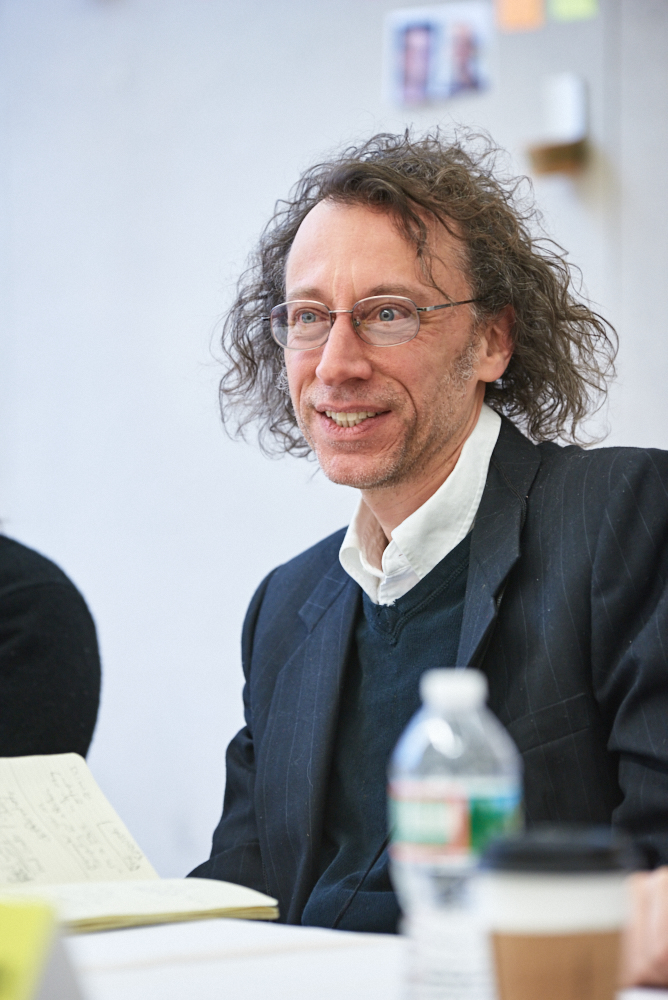
Bill Boichel of Copacetic Comics
Tracy Hurren has been at Drawn and Quarterly for 6 years and is currently the managing editor.
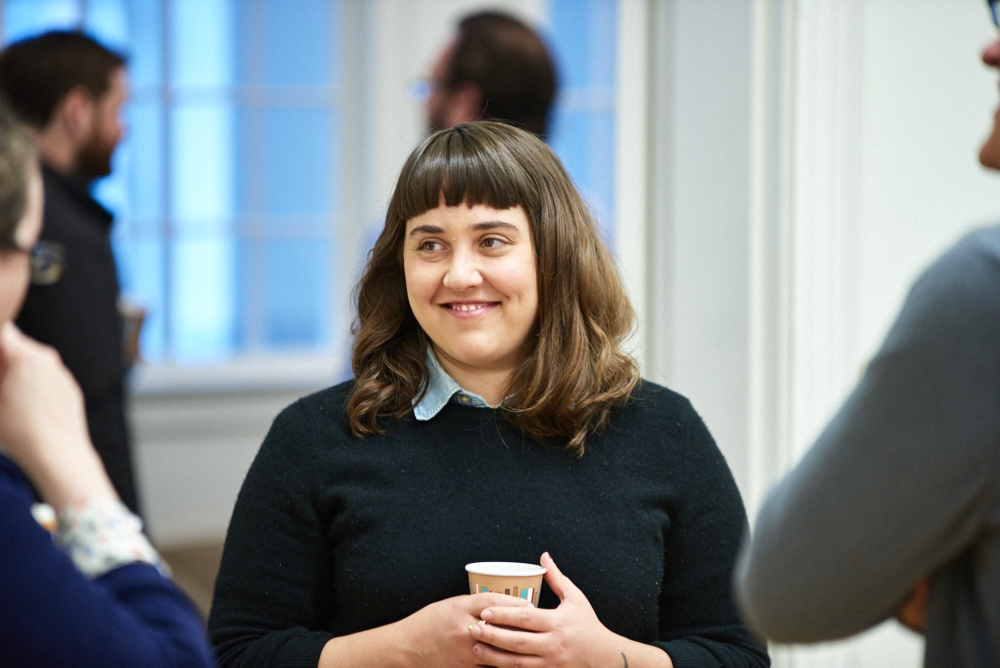
Tracy Hurren from Drawn and Quarterly
Jen Linnan is a literary agent for the likes of Emily Carroll, Carly Monardo, Madeleine Flores, Phil McAndrew, Ryan Adams, and Sam Alden.
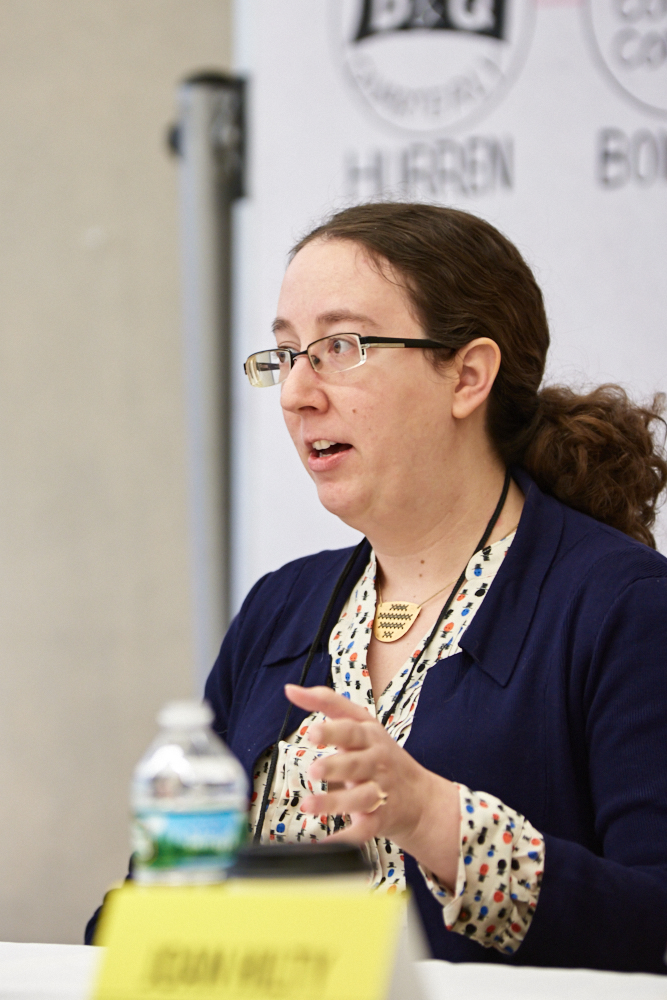
Jennifer Linnan of Linnan Literary Management
Joan Hilty runs the book producing company Page Turner and has worked at Vertigo.
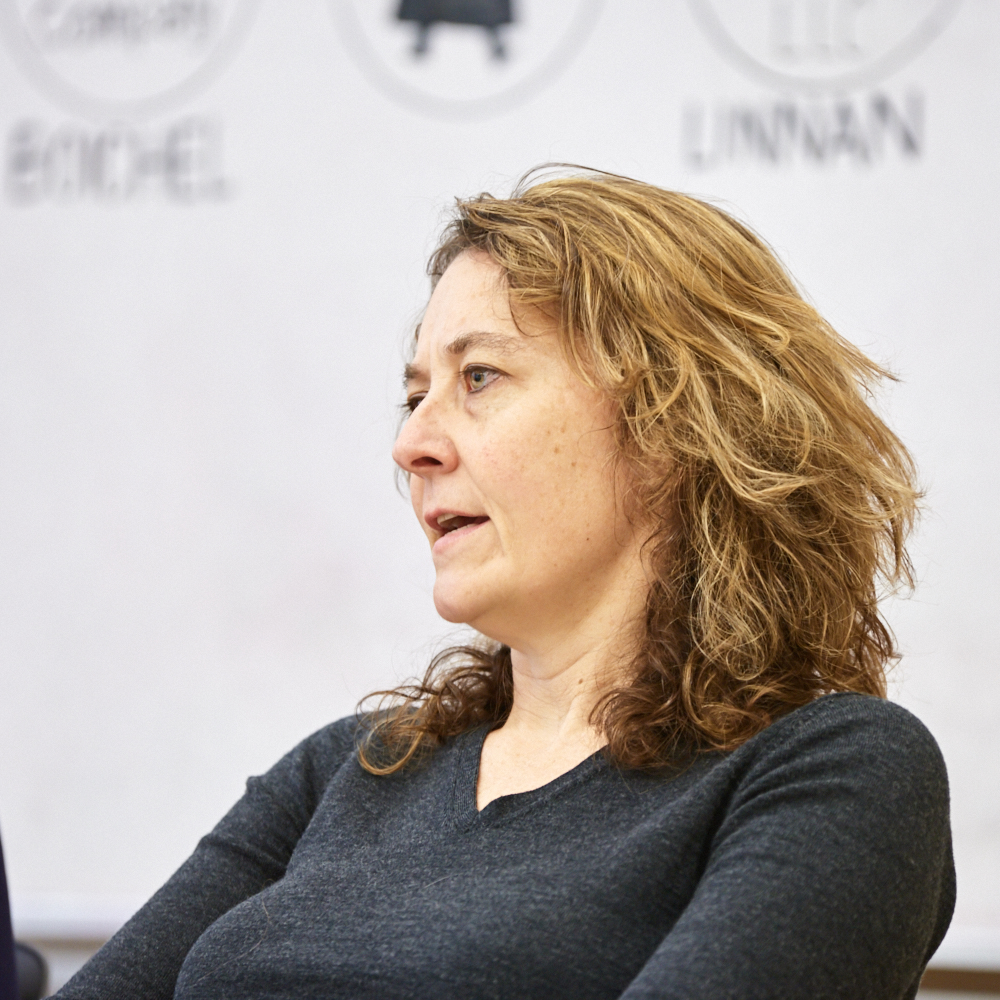
Joan Hilty of Page Turner
What is the new role of social media in promoting and discovering work? It has been an interesting last 5 years, as Joan said. It is more important than ever to have a web presence. But you must have a central location for people to go to. And include your email address! A contact form isn’t enough. Use this place to put your best images. Art directors like to save the work they find online. Kate Beaton is a great example, who of course no one can follow, of how free comics can get you a bigger audience, which leads to more sales. You should also be using social media to find educate yourself on publishers. Find out what specific publishers are looking for. Tracy says it is clear when people send in book proposals without doing the footwork before hand. Follow agents on Twitter; they promote their own books, but they also post about what interests and excites them. Though for Jen, that seems to be tuna melts. As part of this education, you should also pay attention to which of your comics are selling and to whom.
It is a time for note-taking.
-

- Moss Bastielle (’17)
-

- Kristen Rosa (’17)
-

- Shashwat Mishra (’16)
-

- Sophie Yanow (’16) and Tracy Hurren
Are anthologies still a valid form? Bill likes to promote anthologies in his shop because they can be a great starting point for new comics readers. Jen loves reading them and points out that they are a great way to build a resume. Joan finds them to be an important platform, though she admits that might be in part her sentimental attachment after working on Wimmen’s Comix. But the reason that most anthologies are self-published is, as Tracy said, that it is impossible to make money on an anthology after the initial bubble. None of the panel would want to see them disappear though. They are great samplers. In the history of anthologies, they were an important way for minority voices to be heard. And even today, they are good community builders. Tracy says there is no better way to practice making a book than running an anthology.
A serious time.
-

- Moss Bastille (’17), Jarad Green (’17), Kotaline Jones (’16), and Kane Lynch (’16)
-

- Hedj (’17), Emily Sillars (’17), Jacob Boussiere (’17), Kotaline Jones (’16)
-

- Anna Sellheim (’16), J. D. Lunt (’16)
-

- Santiago Naranjo (’16)
-

- Kelly Swann (’16)
Conventions are a big part of toonie life. But how critical are they to people making their own comics? Joan says the important part is getting that face to face, not just with publishers, but with potential collaborators. Jen likes the shows that are more intimate, where people are sharing tables and cosplayers are rare. Exhibitors get to meet agents AND consumers. Tracy finds that at most shows the consumers are actually just other toonies; fewer fans are attending shows. But that is the nice thing about smaller shows—lots of kids. Noelle Stevenson had a line of 12-year olds at one of her last cons.
But also a happy time.
-

- Moss Basstile (’17) and Jarad Green (’17)
-

- J. D. Lunt (’16)
-

- Alex Karr (’16)
-

- Laura Martin (’17)
What is the most important quality: art, writing, character design, etc.? Jen would say layout. Comics are visual storytelling. In a single illustration, something should make you curious. But in sequential art, it is about the pacing and page breaks. These are incredibly important in long form. Tracy pointed out that writing is often the weakest part of most cartoonists. There are lots of great artists, but just because you can draw doesn’t mean you can craft a story. Joan said to recognize your strengths and put those forward. If you aren’t good at crafting a story, collaborate with someone who is! Collaborations might appeal to a larger audience.
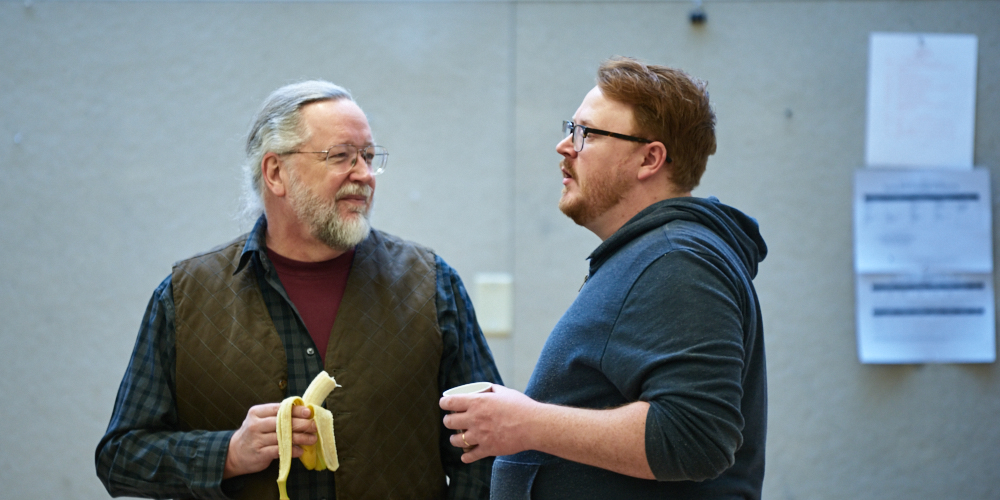
It’s a rare sight to see so much faculty in one place. Here we have Stephen R. Bissette and Luke Howard
Overall, the panel had a very positive attitude towards comics. The students left the talk excited to work on their comics. Later in the day, the students also each got a review with at least one of the panelists. They left even more excited. As it should be.
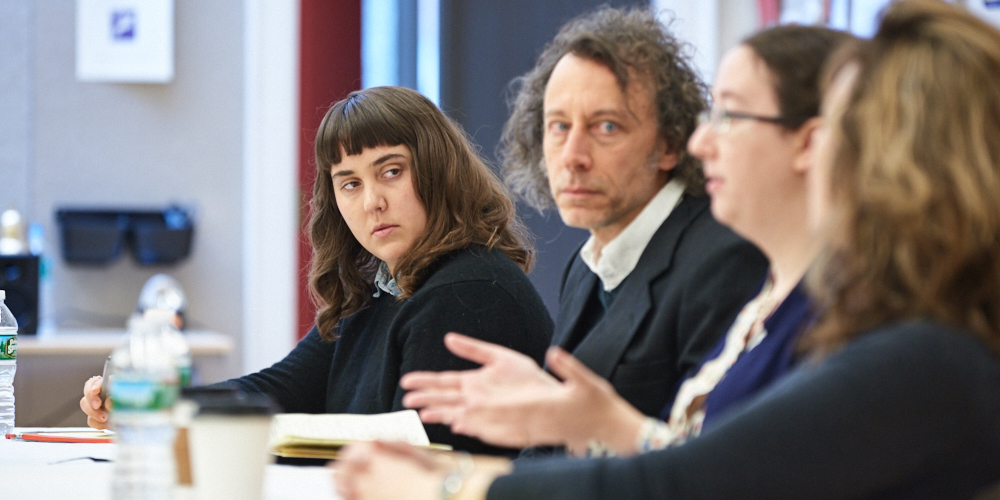
The panel in session

