

 Cartoon Studies on Twitter
 Cartoon Studies on Flickr
 Get the latest news
Little by little the Schulz Library is always expanding its collection.
Thanks to generous donations from publishers, artists, and collectors the world over, our collection is abundant and unique. From our selection of contemporary graphic novels, to our out-of-print and rare collections of gag cartoons and classic newspaper strips, the Schulz Library is a dream come true for the cartoonist bibliophile.
Have a look at some of this week’s newest arrivals!
Ed Emberley’s ABC – Ed Emberley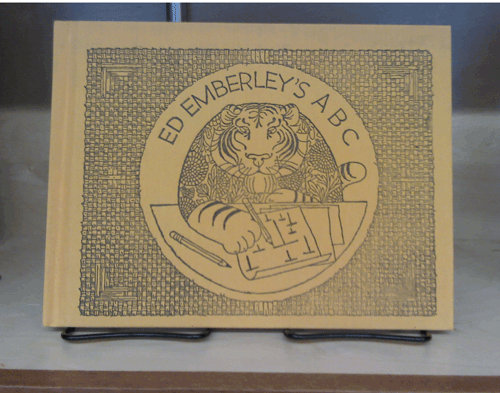
Published in 1978 by J. M. Dent & Sons, Ed Emberley’s ABC is a cleverly presented alphabet book that kids are sure to enjoy reading.
An unusual alphabet book, Ed Emberley’s ABC lushly depicts each letter being constructed by an animal in a double-page spread. Each spread page focuses on one letter with a multitude of examples of things that start with it. At times, different animals co-operate in making letters. Reader’s can trace each letter using their fingers to follow the correct formation.

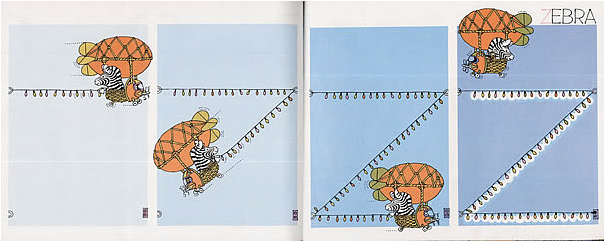
It’s been a while since Ed Emberley visited the Center for Cartoon Studies, so it’s a treat to add Ed Emberley’s ABCs, to the Schulz Library’s collection.
Ein Mann, Kein Wort (A Man, No Word) – Frank Flöthmann
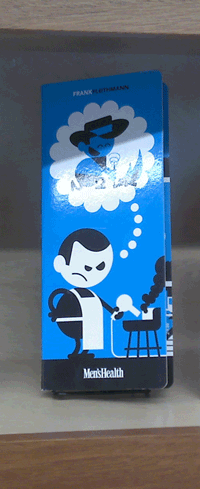
Ein Mann, Kein Wort is a hard to find print collection of Berlin based illustrator, Frank Flöthmann‘s monthly submissions to the German magazine, Men’s-Health. This elegantly designed collection of the popular monthly comic contains 19 word-less gag-based strips that occupy one 2 page spread each.
Flöthmann’s playful use of icons and symbols is sure to have you chuckling.

You can preview the contents of this collection over on Flöthmann’s website via Issuu.
Comic Strip Showcase 2: Polly and Her Pals – Cliff Sterrett
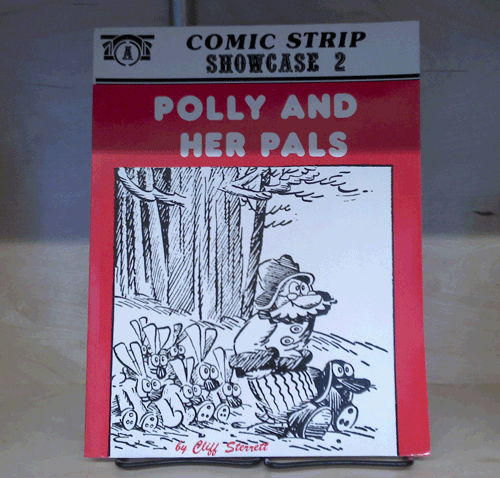
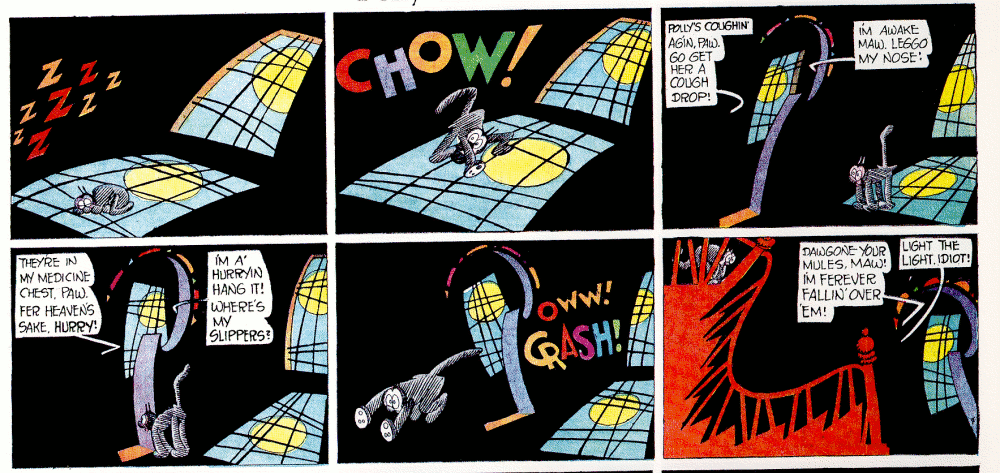
This substantial collection, published by Arcadia Publications in 1990,reprints the Polly and her Pals daily strips that Cliff Sterrett drew from November 5, 1930 through December 31, 1931.
Regarded as one of the most graphically innovative strips of the 20th century, Polly and her Pals began as a daily comic on December 4, 1912, and ran a total of 46 years, ending with Sterrett’s retirement in 1958. The strip centered on the lives of Maw and Paw Perkins and on their daughter Polly, along with her male suitors. (For those interested in the strange conjunction of Sterrett’s pre-feminist prejudices and his feminist views on the oppressive nature of marriage, be sure to read 2012 CCS graduate, Melanie Gillman’s great queer critique of the strip!)
Simply put, these 1930-31 dailies are just as off-the-wall as anything that Sterrett’s contemporaries Gene Ahern, George Herriman or Milt Gross were putting out during the golden age of newspaper comics.
A curious design decision in this collection is the way panels are arranged on the page. Though Sterrett’s dailies were 4 panel gags, the book presents the strip in three panel rows. I would assume that this decision was due to printing format limitations presented to Arcadia in 1990. Although one might think that this slight reformatting would not interrupt the reading experience very much, the truth is that it becomes difficult to fully appreciate the strip when it is presented in a lurching manner such as this.
Nevertheless, despite the occasionally awkward reading experience, it’s great to add this to the Schulz Library’s collection, especially given how few collections of Sterrett’s dailies actually exist.
The Underground Sketchboook of Jan Faust – Jan Faust
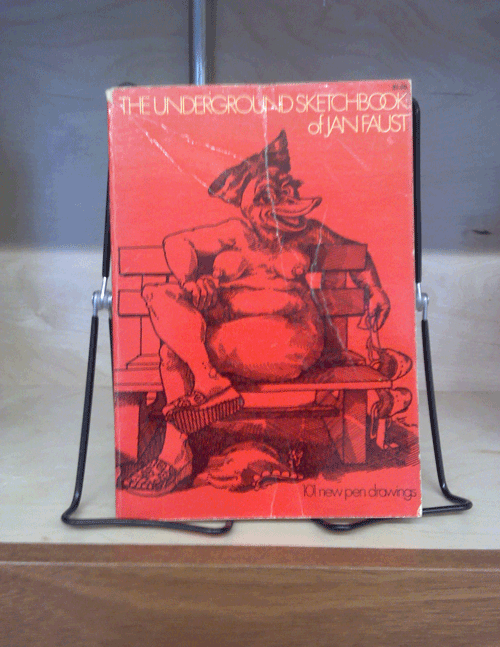
Who is Jan Faust? What is The Underground Sketchbook?
I don’t have clear answer for either of those questions because as it turns out, there’s not much information available on the life of Jan Faust.
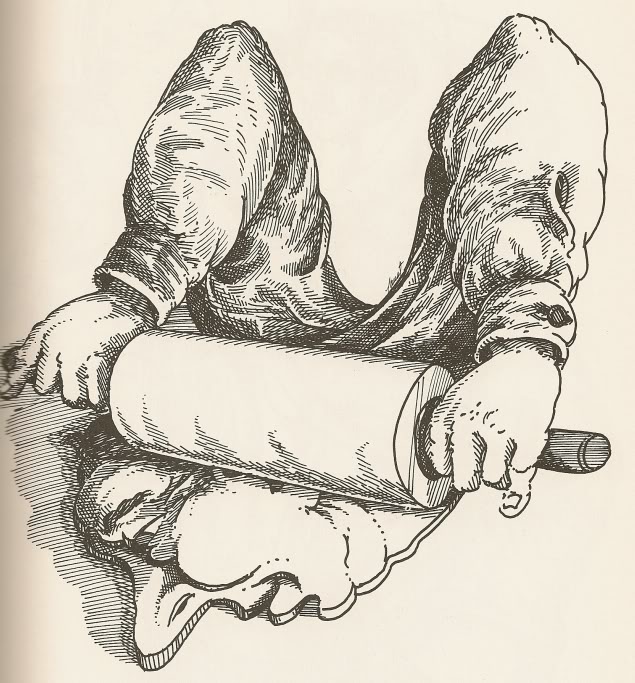
From what little is known, though, it seems to be clear that in the early seventies, Jan Faust was a regular contributor to the pages of The Nation, New York magazine, National Review and The New York Times. In these pages he would use all the meticulous draftsmanship of the old-world engravers, only to shatter it with the most outrageous whimsy and grotesque social commentary. In a bold pen technique akin to that of R. Crumb, Faust worked in a tradition similar to Goya and Daumier, touching the sore spots of society. His drawings are reminiscent to those of B. Kliban in terms of surreal immediacy.
From the looks of it, the 101 drawings published by Dover Publications in 1971, do not seem to have ever been published outside of this collection. As such, this book puts a special spotlight on Faust’s most arresting visions. Faust has recorded what one might believe to be the secret anxieties of mid 20th century in America.
Should you choose to take a look at the world through Faust’s pen, you may see otherworldly visions of the world we live in through horrific transformations of the familiar.

Have any books that you think deserve a place at the Schulz Library?
Donate!
For donations and inquiries, please contact:
The Center for Cartoon StudiesPO BOX 125
94 South Main Street
White River Junction, Vermont 05001
(802) 295-3319
library@cartoonstudies.org
