

 Cartoon Studies on Twitter
 Cartoon Studies on Flickr
 Get the latest news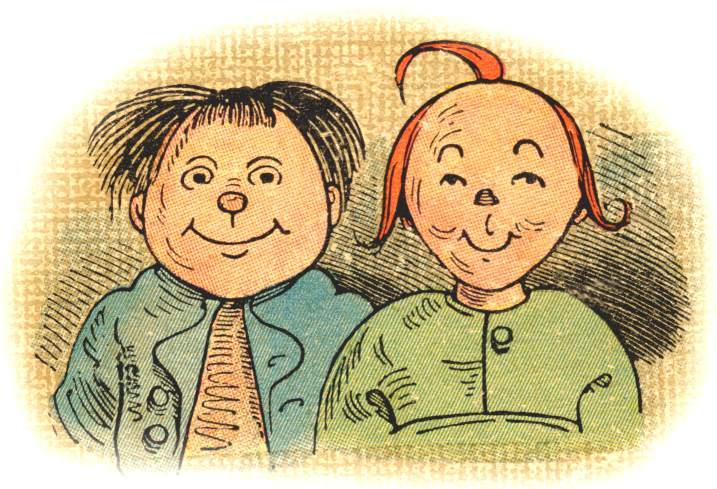
Who are these punks?
Meet — if you haven’t met them before — Max und Moritz, one of the many ‘offspring’ of the amazing Wilhelm Busch, one of the 19th Century’s founding fathers of what we now call comics, comix and graphic novels!
Inspired by the work of innovative Swiss artist/cartoonist and pioneer graphic novelist Rodolphe Töpffer, Busch’s early cartooning blossomed into one of the real masterpieces of 19th Century comics in 1865, when the misadventures of the ever-opportunistic and often surprisingly sadistic Max und Mortiz were first published.
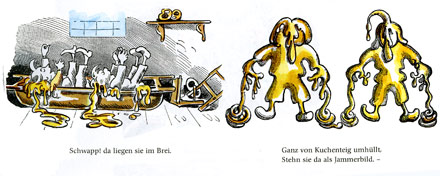
Like the (then) far-in-the-future Tex Avery cartoon characters, Max and Moritz seemed capable of surviving even the most extreme acts of destruction and self-destruction to return, a page or two later, intact and ready to dish out or suffer fresh abuses. They were even baked into pies at one point (see above)!
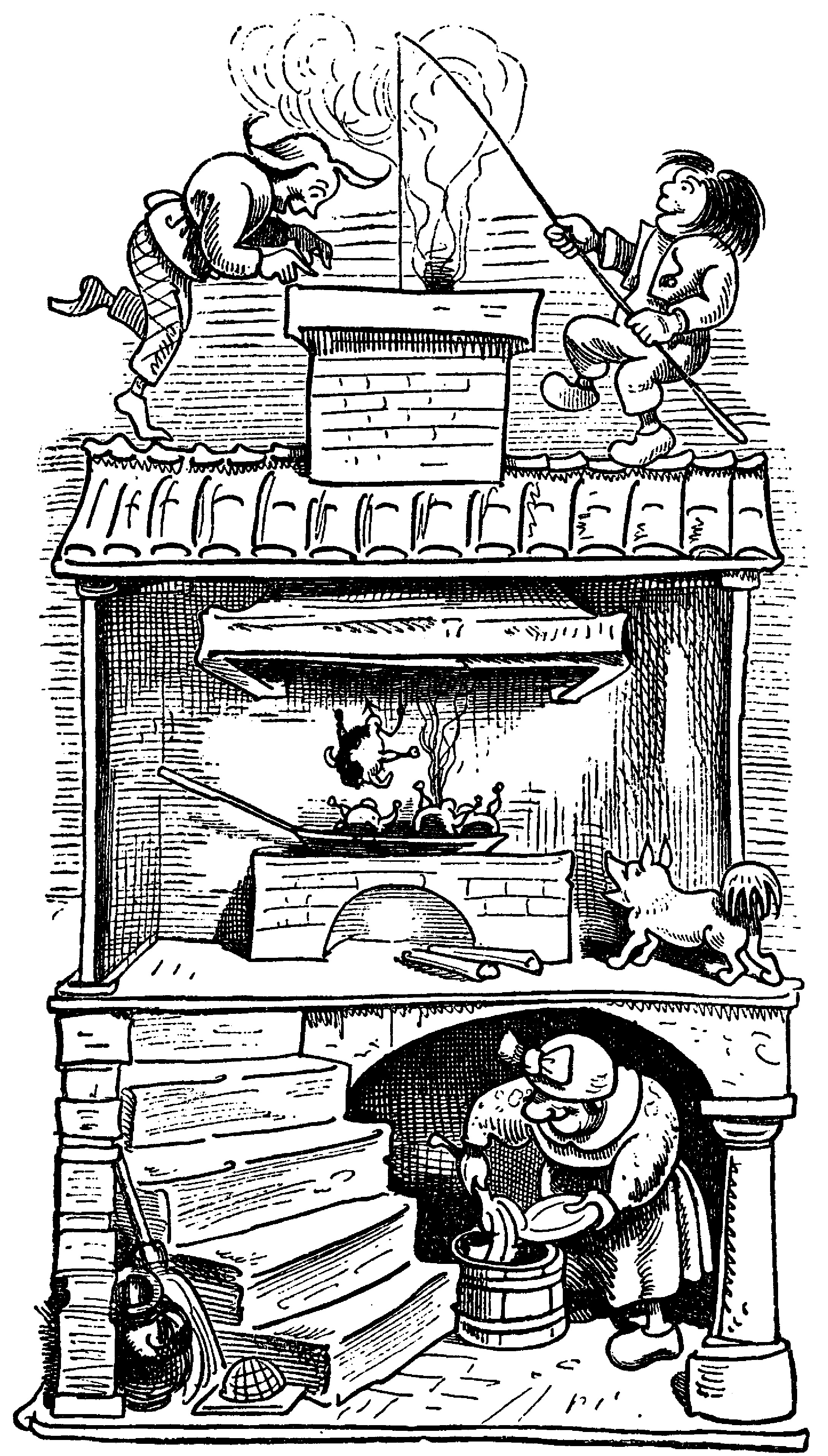
Building as he was on the essential groundwork laid by Töpffer, it’s no surprise that Busch pushed what was possible on the printed page even further than Töpffer ever had. Take a look at the Busch page above — that’s pretty imaginative panel/environment/layout work for the late 1800s, and it reads with effortless naturalism. Amazing stuff.
That’s the nature of cartooning: each and every generation learns from the one that came before, and creatively expands (consciously and often unconsciously) the parameters of what’s conceivable and possible with this most elastic and expansive of all narrative forms.
And so it went with Busch‘s own body of work, and all who followed. Max und Moritz was the most popular comic creation in 19th Century Germany and much of Europe, inspiring the American comicstrip artist Rudolph Dirks to spin Max und Moritz into new incarnations in the then-new canvas of the color newspaper comicstrips — as The Katzenjammer Kids!
Though Busch is primarily remembered today for Max und Moritz alone, he created many, many other 19th Century comics and precursors for what we now call the graphic novel. Popular as his ‘children’s books’ were, Busch also explored more adult characters and themes, though his characteristic wit always informed the narratives and artwork. Among Busch’s later works were Drei Bilderbogen (1860-62), Bilderpossen (1864), Die Kühnen Müllerstöchter (1868), Pater Filuzius (1872), Die Fromme Helene (1872), Dideldum (1874), Flipps der Affe (1879), Mahler Klecksel (1884), Von mir über mich (1879), Eduards Traum (1891), Der Schmetterling (1895), and others.
Busch was still active in the early 20th Century, and like the late, great Will Eisner, Busch died “with his boots on,” so to speak, still vital and creative to his last days. Busch completed Zu Guter Letzt (1904), Hernach (1908) and Schein und Sein before leaving this mortal realm behind (the latter was published after Busch‘s death in 1908).
We have a pretty good collection of Busch‘s works in the Schulz Library, in their original German language and in English-translated editions.
An evening or two spent with Busch and his marvelous trail-blazing creations is guaranteed to inspire any self-respecting 21st Century cartoonist to blaze a few trails of his or her own!
– S.R. Bissette, Mountains of Madness, 8/21/09
______________________________________________

