

 Cartoon Studies on Twitter
 Cartoon Studies on Flickr
 Get the latest news
Industry day brings professionals to The Center for Cartoon Studies to talk to and review art by the current students. This year, CCS welcomed Jen Vaughn ’10, Tom Kaczynski, Chris Pitzer, Allison Baker, and Bill Kartalopoulos to campus.
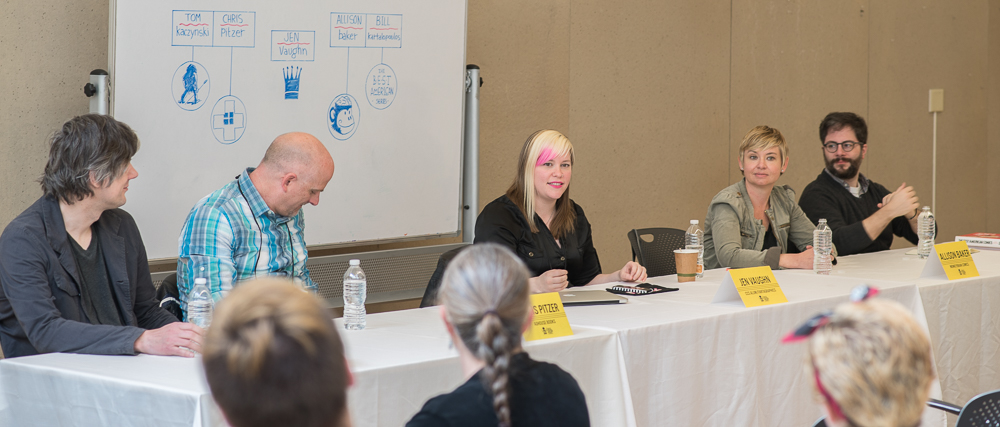
The complete panel: Tom Kaczynski, Chris Pitzer, Jen Vaughn ’10 (moderator), Allison Baker, and Bill Kartalopoulos.
Jen Vaughn ’10 is a graduate of CCS and most recently a Marketing Manager at Fantagraphics – a position she held for three years before leaving to pursue her own work. She used what she learned at CCS to work with the press, set up book tours, and more. Jen served as the Industry Day moderator for the panel discussion.

Steve Bissette with former student Jen Vaughn ’10.
Tom Kaczynski founded Uncivilized Books. Their first year, they published three comics; five the second year; and eight books the third year. Uncivilized Books focuses on the literary end of the spectrum with a bit of all ages and fantasy. In general, they just publish work they like.
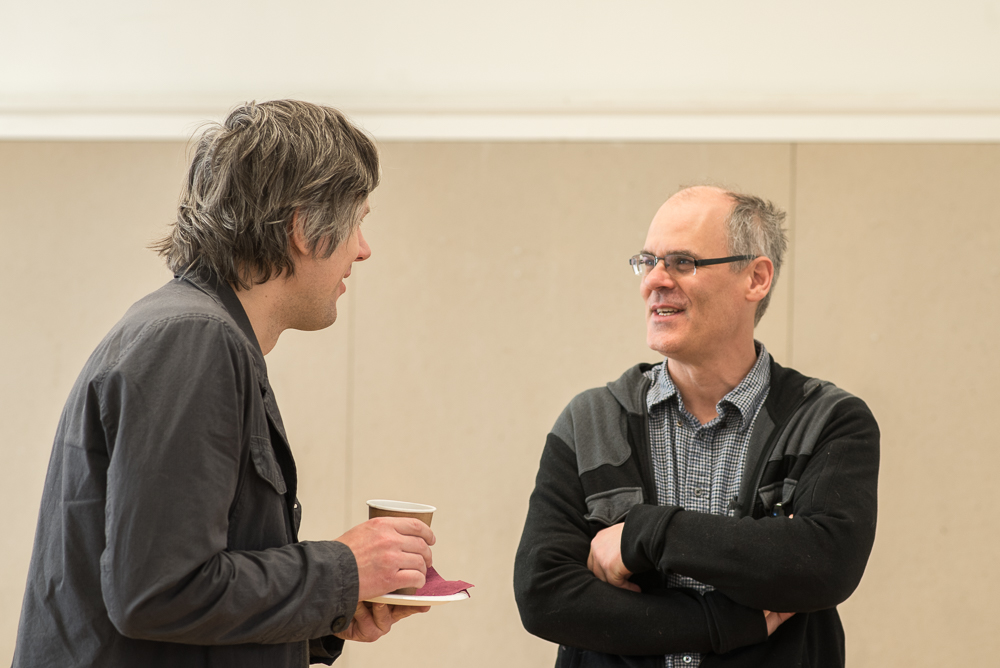
Tom Kaczynskyi talking with CCS Director and co-founder James Sturm.
Chris Pitzer founded AdHouse Books in 2002. In their early days of operations, AdHouse were winners of the SPX’s “debut” category, which led to a distribution deal with Diamond. In 2012, Joe Lambert ’08 did their 10-year anniversary calendar.
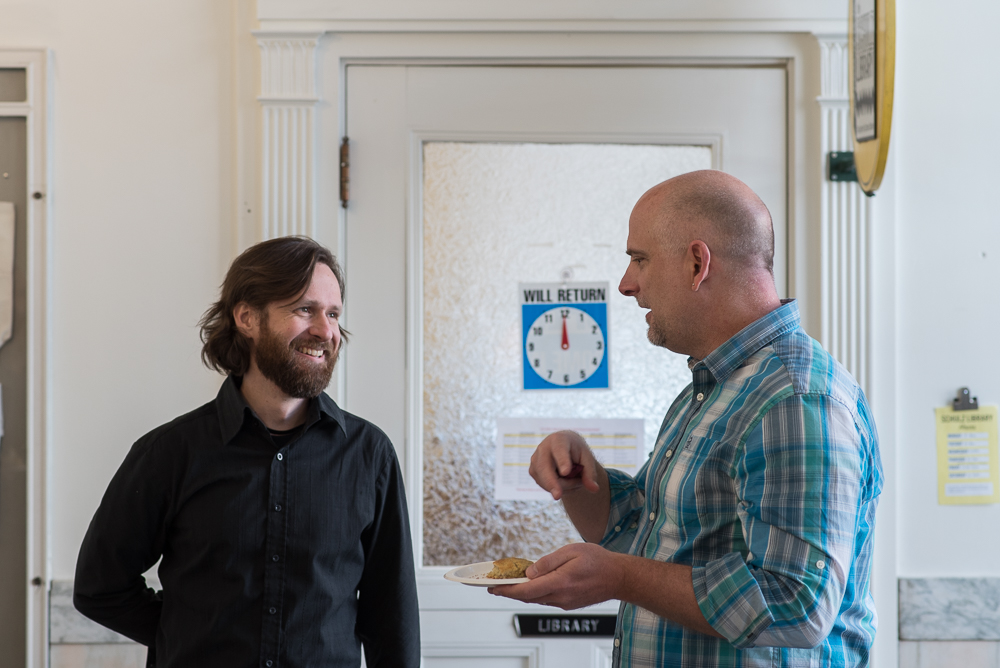
Dave Lloyd, administrator of CCS, talking to Chris Pitzer
Allison Baker is the driving force behind Monkey Brain and the director at IDW. Monkey Brain started as a print business but changed their business model with the uprise in digital media. Monkey Brain’s Bandette has been nominated for four Eisner awards.
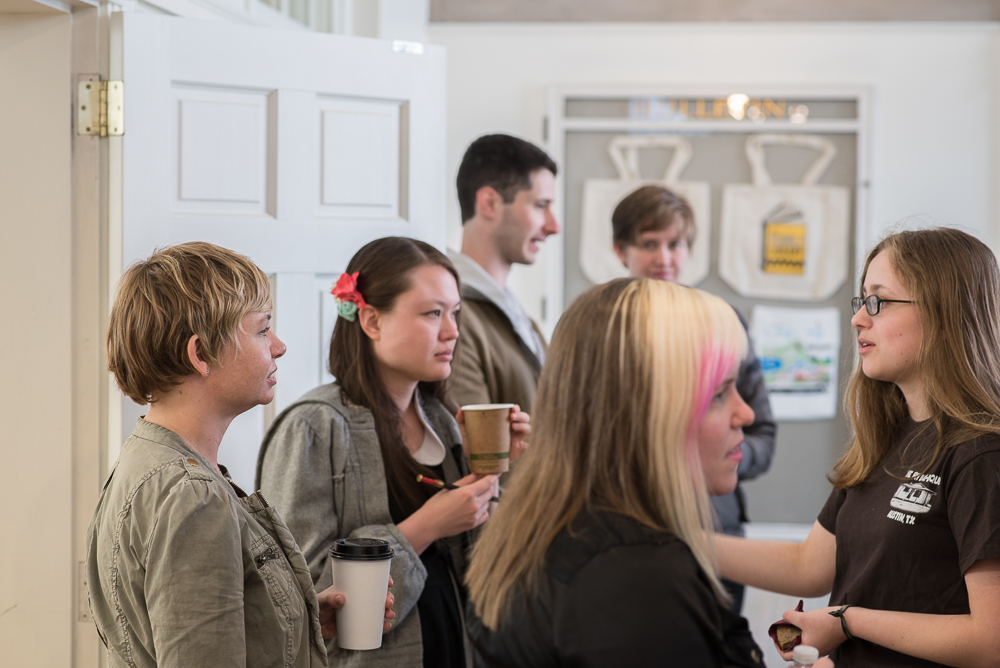
Allison Baker talking to Kotaline Jones ’16 and Tillie Walden ’16, with Jen Vaughn ’10 in front.
Bill Kartalopoulos is the editor for Best American Comics and runs the panels and guests for MOCCA and SPX. Each year he collaborates with a guest editor for the Best American Comics.
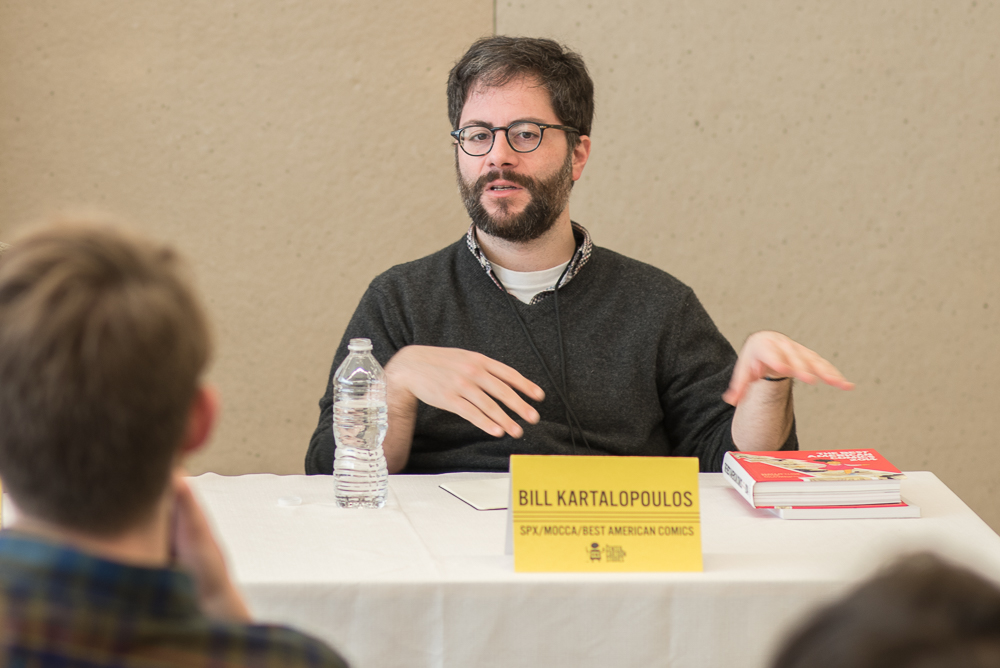
Bill Kartalopoulos talking on the panel
Among the many topics tackled by the panel, digital publishing was of great interest to the students. Tom started Uncivilized Books specifically for print and noted that he has no interest in digital publishing. He noted that there was a panic moment when digital publishing started with its significant adoption rate. But then sales petered off and have reached a point of stasis. Bill pointed out that digital books are really just an economic model. He believes the simultaneous release of print and digital will eventually go away. Publishers will begin to format specifically for print or digital. Though the epub format of traditional novels has been standardizing, comics have not yet; there are still many platforms. Allison likes the low price point of digital comics so that people can try out new material. She also knows that print will never die. Her daughter, raised with digital media, doesn’t discriminate between a physical book, tablet, and phone.
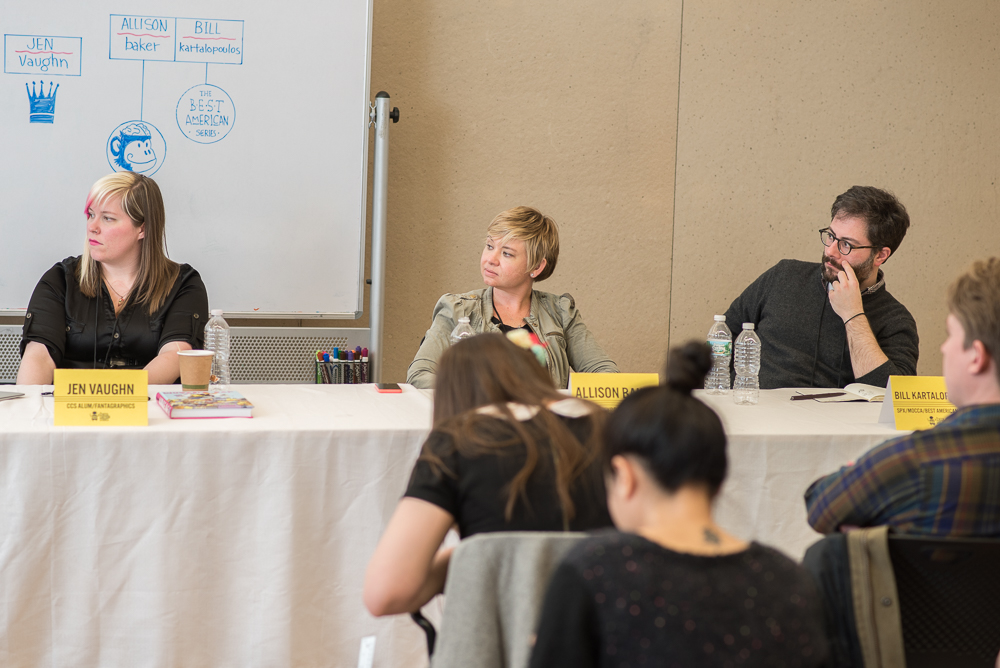
Jen Vaughn, Allison Baker, and Bill Kartalopoulos listening attentively on the panel.
They also discussed the purpose of a publisher, as opposed to self-publishing. Chris said that the publisher basically handles all the headaches like printing, shipping, and so on. Tom pointed out that Kickstarter is a double-edged sword; you are mostly just selling to the audience you already have. Bill worries about people who print enough of their book only to meet the demand for their Kickstarter audience.
Jen Vaughn, Allison Baker, and Bill Kartalopoulos listening attentively on the panel.
The whole panel discussed many more topics with passion. It was good for the students to see the publishing side of the business and what these people bring to the table. Later, all the students had a review of their comics with at least one of the panelists.
Photos courtesy Abe Olson.

