

 Cartoon Studies on Twitter
 Cartoon Studies on Flickr
 Get the latest news
Luke Healy, an Irishman, is publishing part of his thesis project. Just before graduating from CCS in 2014, he won a MoCCA fest Award of Excellence from the Society of Illustrators for his comic Of the Monstrous Pictures of Whales. Nobrow Press just published How to Survive in the North. I emailed with Luke while he was at a pit stop with email on his current adventures backpacking the west coast of North America. What follows is the edited interview.
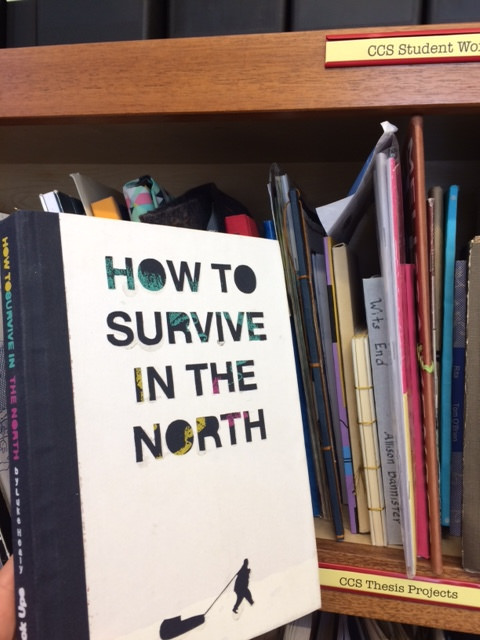
Luke’s thesis project.
Angela: You graduated CCS in 2014. Who was your advisor?
Luke Healy: Jason Lutes was my thesis advisor!
A: I am assuming that his massive research on Berlin is what made him a good adviser? And he’s awesome, of course. What in particular drew you to him? You did the second year low res?
L: Y’know, I think Jason just has a great head for narrative. He’s a great editor. Kind of like a comics doctor. He looks at your work, and can diagnose the flaws you don’t even know are there.
Interestingly enough, Jason wasn’t my first choice of thesis advisor. I didn’t initially think of asking him, because he’s a CCS faculty member, and I had assumed I’d have some access to him throughout the year anyway. I was paired with a cartoonist who I won’t name, that ended up flaking out pretty immediately, and then I learned that I’d have to leave the USA for the first semester of my second year. At that point, Jason seemed like the obvious choice, and it became clear pretty immediately that he was the perfect choice all along.
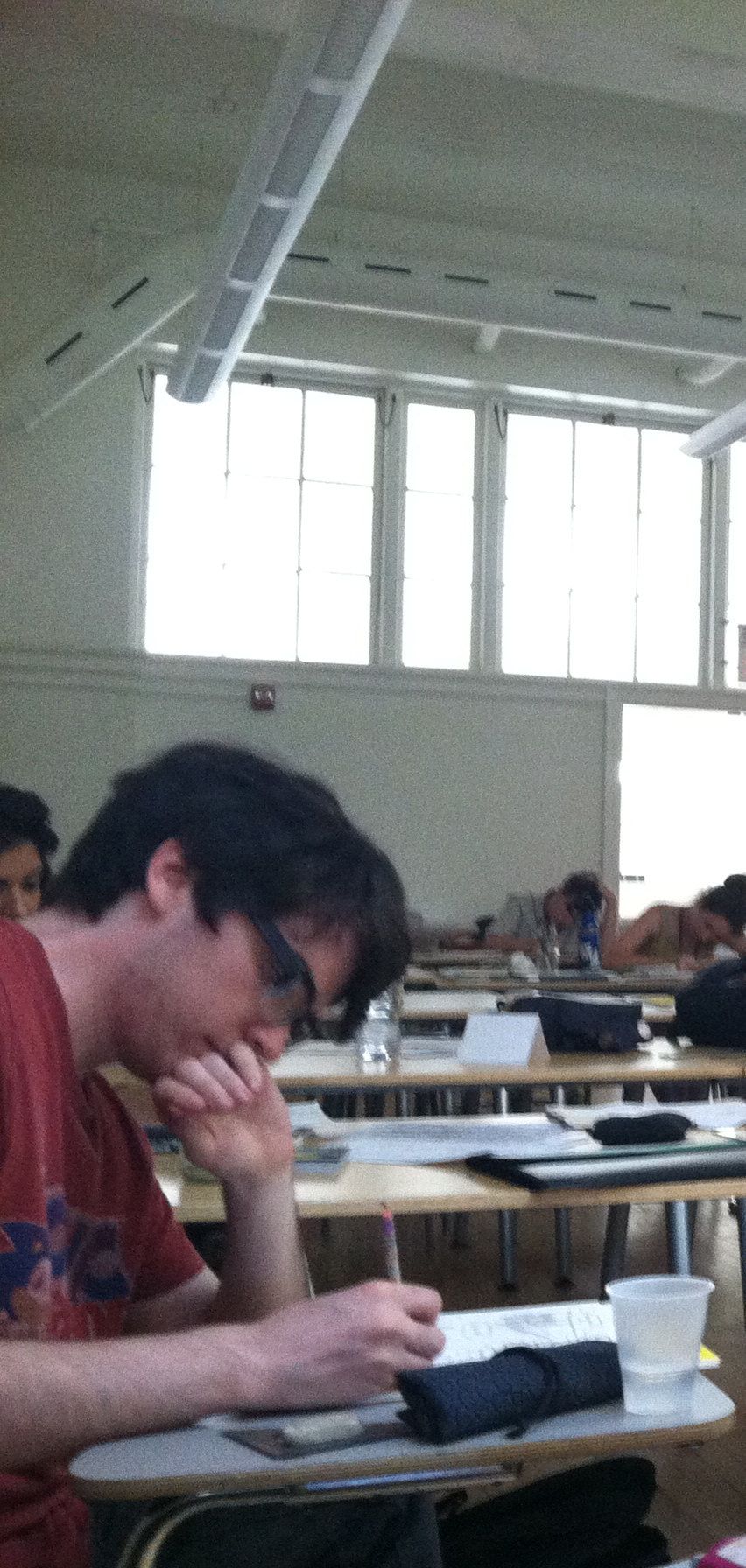
Luke drew a lot during his time as a TA for Jon Chad and Alec Longstreth in the Cartoon Studio summer workshop
A: If you could have had any advisor living or dead, no limitations, who would it be?
L: I have to say, Jason was really the perfect advisor for this project, but I’d love to pick Posy Simmonds‘ brain. Or maybe Andrew Hussie. That guy is next level.
A: Could we talk about coming to CCS from across the pond? Was there a lot of culture shock? Was it your first time leaving ireland?
L: It was far from my first time leaving Ireland. The summer before I moved to White River Junction, I actually backpacked around Europe on trains by myself, so I have always loved to travel.
That being said, I hadn’t been to the USA since I was a child, so there was definitely some culture shock. I’ve obviously watched a lot of American movies and TV (ask anyone, I have a bit if an American accent) but there are some things that doesn’t prepare you for. The food for example. I’ll never forget stopping at a Cracker Barrel on a road trip down to SPX a couple of days after I moved over. I may still be in recovery.
A: Oh yeah. I remember, Pigs I think? Your comic about traveling on the train. [Note: It is Eat the Pig and it is not as bad as he claims it is. 🙂 It also appears to no longer be available.]
L: Yup. It’s a terrible comic, and I hope nobody has to read it again, haha. I made it specifically with my CCS application in mind, and I got in, so I guess it was good for something!
A: What about Cracker Barrel threw you for such a loop? I’ve never been.
L: The portions are huge and disgusting. Don’t bother trying it out.
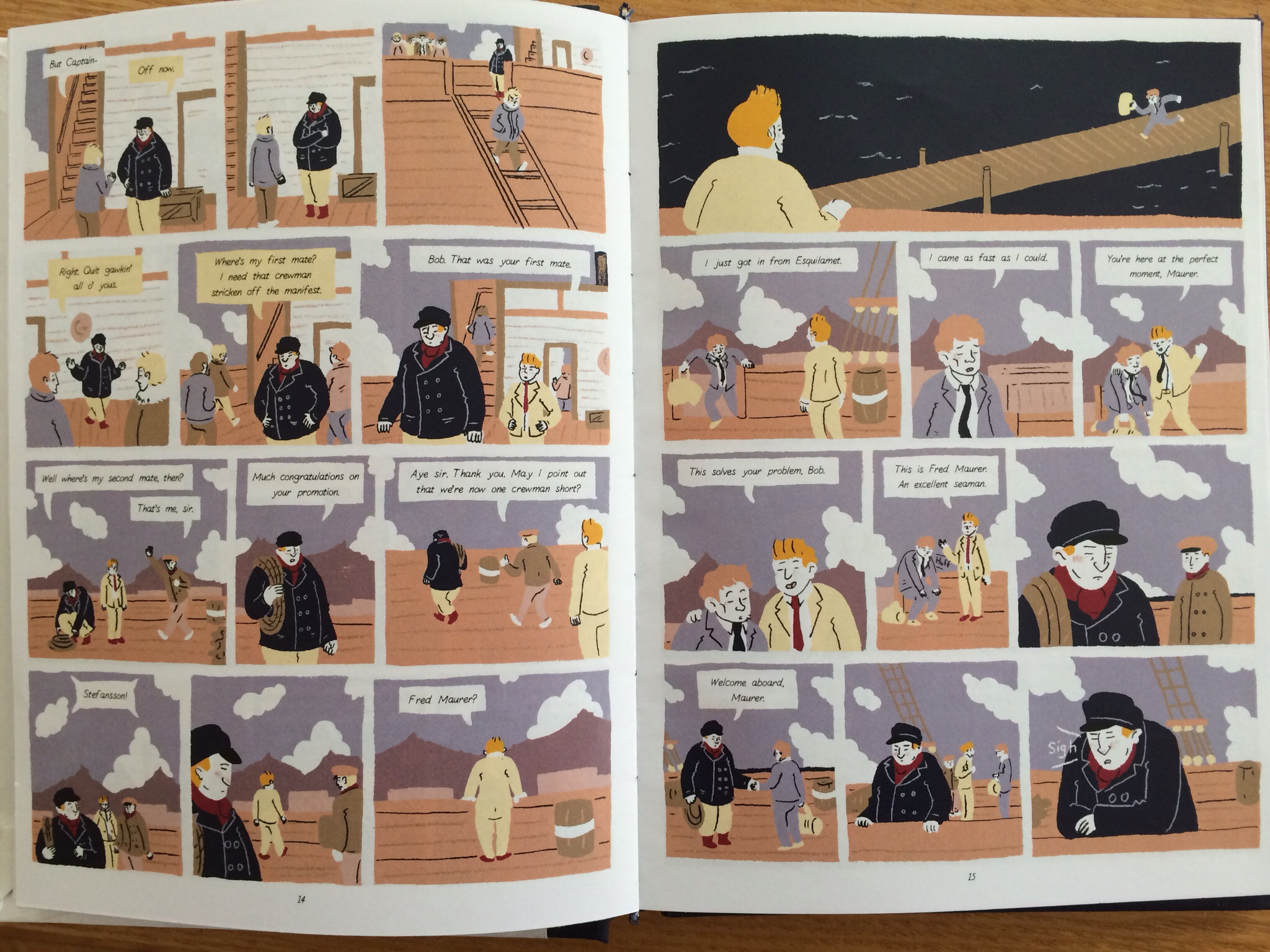
Pages from Luke’s thesis project.
A: So first I should have asked why you are taking this trip away from the internet. How’s the timing work out with the books you have coming out this year?
L: Well, the timing is pretty inconvenient, honestly. When I graduated CCS, I had a bit of a “what do I do now?” moment.
I graduated in May, and I didn’t hear back from Nobrow until October or November I think, so I didn’t know the book was going to be a thing. I heard about this trail (the Pacific Crest Trail, a wilderness trail that runs 2660 miles through California, Oregon, and Washington, connecting Mexico and Canada) and became a little obsessed with it. I had no experience backpacking, so I set the date 2 years in the future to leave time to prepare. It was really helpful to have a goal again. Gave me structure.
Then I heard from Nobrow, and worked on the book during that time, and when I learned it would be launching during the time I was planning to be on trail, I had to have a long think about what I was going to do.
Eventually, I decided that I wouldn’t postpone this trip. I agonised over the decision, but I knew that in the end, there’s never a good time to take five months out from your life, and if I delayed now, I’d end up putting it off forever.
Nobrow have been really gracious about it, and I’ll be doing lots of promotional stuff once I finish in September. I’m hoping to be at SPX this year, where the book will be having its American launch, and I was also just invited to an Italian comics festival, so hopefully that will work out too.
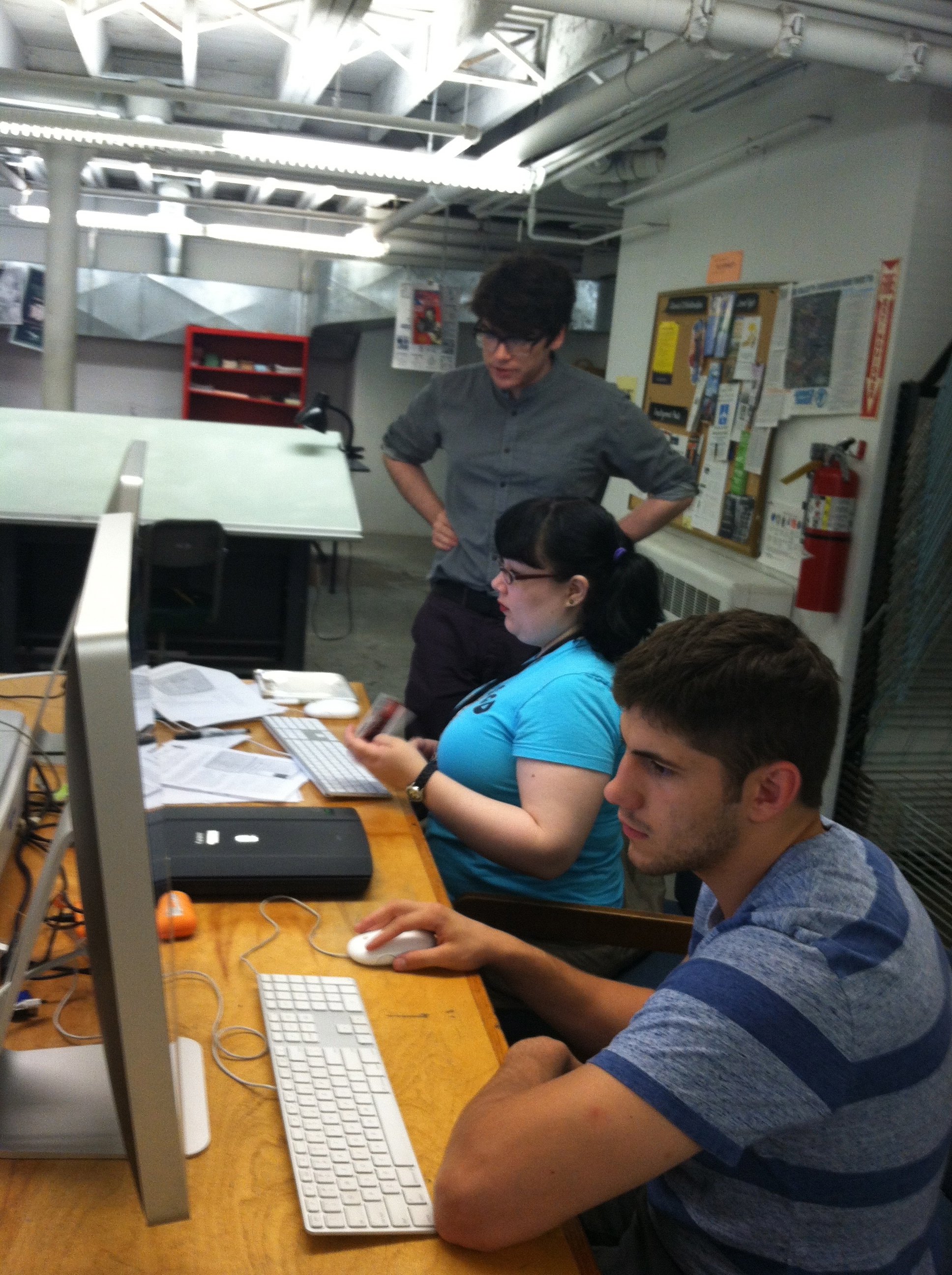
Luke helping me in the lab during the summer workshop.
A: How is it publishing your thesis? It was completely drawn when you submitted it to Nobrow, or did they find you? Or somewhere in between?
L: I won’t lie, it feels weird to be publishing my thesis. I’m very proud of How to Survive in the North, but in some ways it still feels like student work to me. Not that it isn’t professional quality, but I did all of my research for the book at the Dartmouth Rauner Special Collections Library just across the river in Hanover, so I strongly associate the stories in the book with that time.
I pitched the book to Nobrow with the same draft that I turned in for thesis review. The book was all written and roughly pencilled, with about 30 pages of finished art. I ended up changing a lot for the Nobrow edition. Almost all of the pages were redrawn, and a good chunk was rewritten. The final published version is also about 60 pages longer than my thesis version.
I met Tucker Stone, Nobrow’s US sales and marketing director, at the industry day of my second year. He liked my work and encouraged me to send a pitch, but other than that I just followed their submission guidelines. They had, and possibly still have, an open submissions policy.
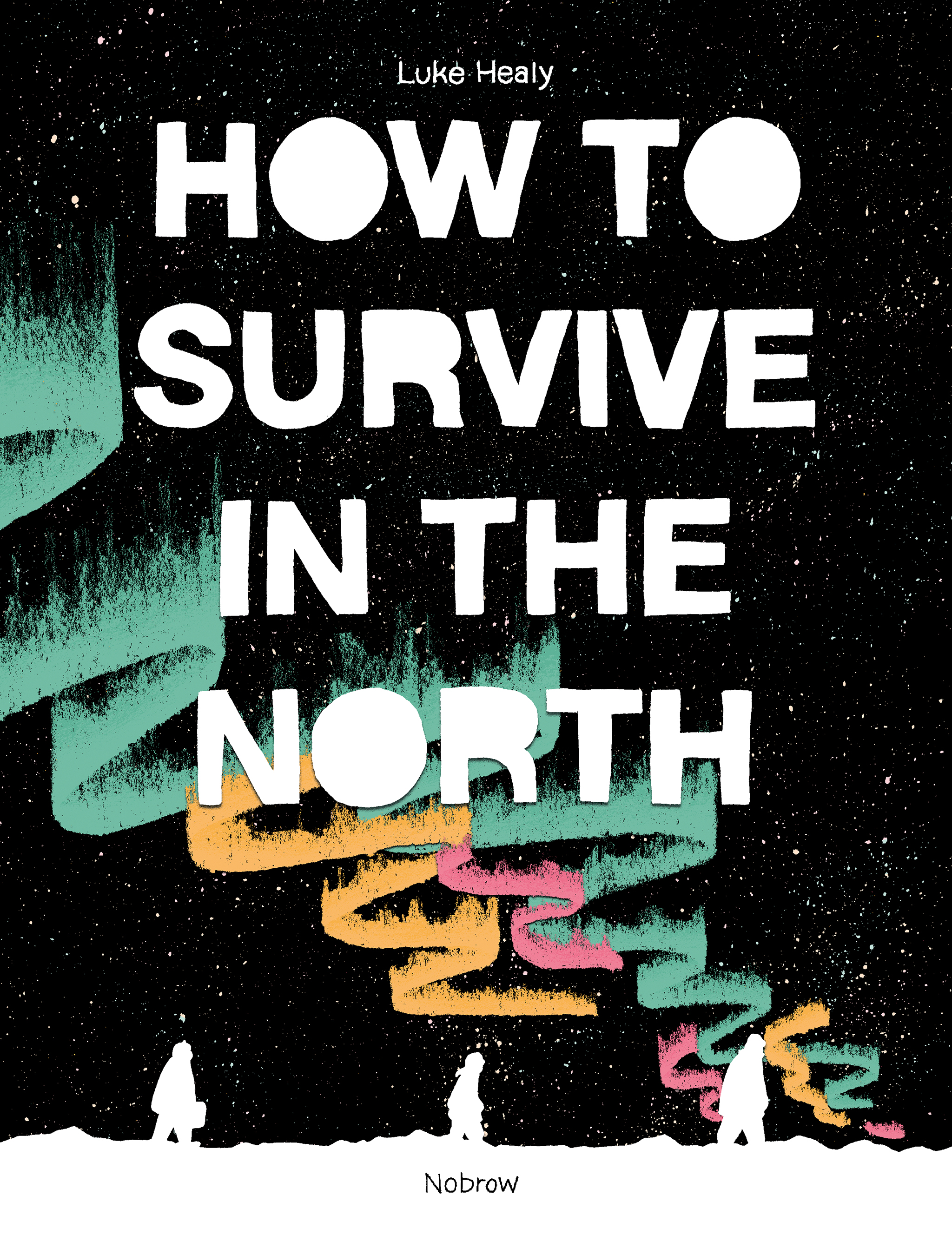
Nobrow’s cover of How To Survive in the North
A: How long did the research part take you? How did you come up with such a research heavy semi-fiction tale? Would you call this semi-fiction?
L: It’s actually a pretty huge coincidence. Months before applying for CCS, I had been looking up some photo reference for a comic, and a really striking photo of a woman named Ada Blackjack was among the Google image search results (I think I had been searching for a picture of a parka or something). I clicked through to her Wikipedia page and read her story and was fascinated. Then I just sort of forgot about her.
When it came time to choose a thesis topic, I remembered her, and decided it might be fun to adapt her story into a comic. Then, when I went to do a bit more digging online, I discovered, by a massive coincidence, that all the primary sources about her expedition were in a library only ten minutes from CCS. I couldn’t believe it. I got to read her actual 90 year old diary, written on receipts for a photo shop while she was marooned on an Arctic island. It was insane. The scope just grew from there.
I think the best term is fiction “based on a true story” as I interwove a separate fictional narrative into the book, but you can really categorize it however you like. Research took about three months.
A: Did you work with an editor through Nobrow? Or did they leave you alone to work on it? How did the editing process work in either case?
L: Nobrow were pretty hands off throughout. I kind of got to do whatever o wanted, which I was happy with. I was assigned an editor near the end of the process to help smooth things out, which was definitely useful.
-
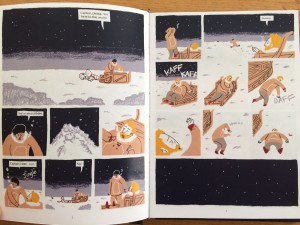
- Pages from Luke’s thesis
-
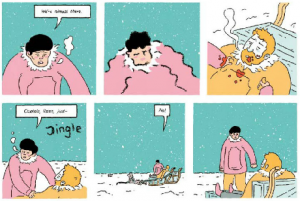
- Part of the same page in the Nobrow edition.
A: When you finish a book, are you already ready to start your next project or do you need time to unwind before coming up with your next project?
L: I took a couple of months off after finishing the book, but I had written a pretty substantial short story while I was drawing up the last half of How to Survive, so I just drew that, and it will be out in September. As for my next long book, I’m not sure when I’ll start working on it. I already know what I want it to be about. It’s more personal, more like a memoir about my teenhood, so that will be an interesting change of pace. I don’t know when I will be ready to start working on it. Right now I am trying to hike the Pacific Crest Trail from Mexico to Canada, so it will definitely have to wait at least five months, haha!
A: What’s the project out in September? Is that also through a publisher?
L: It’s a 60 page comic entitled The Unofficial Cuckoo’s Nest Study Companion. It’s definitely my most ambitious comic to date, and attempts to combine elements of comics, prose and scriptwriting. I’m really happy with how it came together.
I’m going to self publish a small edition of the comic, to have at SPX (with the help of CCS alums and my fellow Dog City editors Simon Reinhardt and Juan Fernandez). After that, we’ll see. I’ve had interest from a publisher, so it might possibly come out through that channel. But get a copy at SPX if you want one!
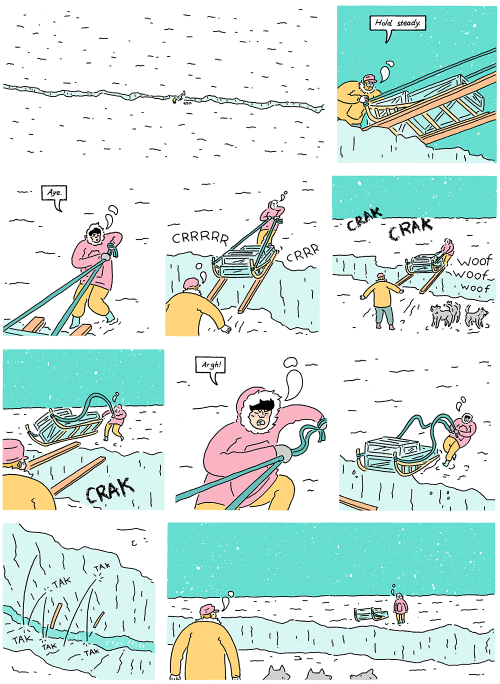
Page from the Nobrow edition of How To Survive in the North
A: What’s your favorite thing to draw?
L: My favourite things to draw are birds, and little people in uniforms.
A: What is it about birds? Even more, what is it about little people in uniforms? Do you mean “little people” or tiny drawings?
L: I’m not sure. Birds are just satisfyingly aerodynamic and pointy.
I mean tiny drawings. I like to draw small, and mostly try to have figures less than half of the panel’s height over most of the page. Not sure why, I just think it works better.
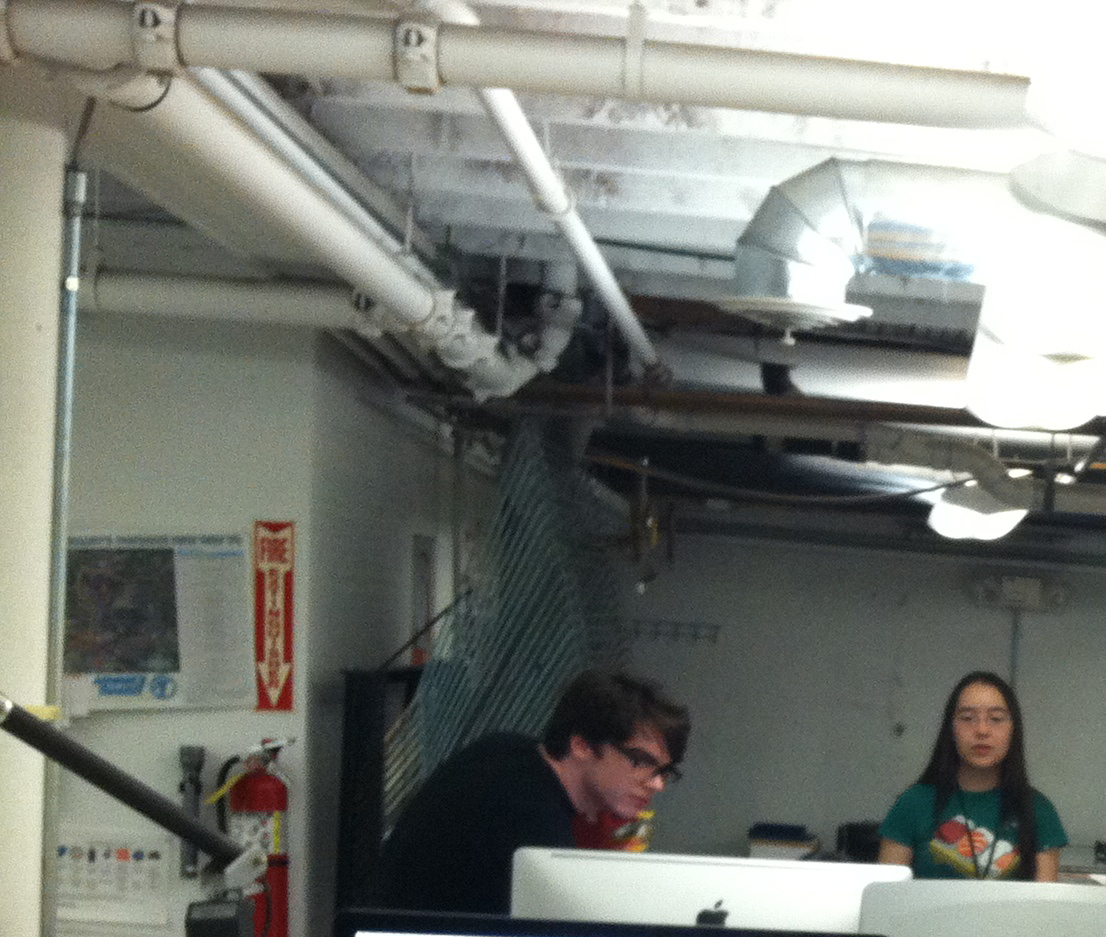
Luke was a very helpful TA in the lab during the summer workshop.
A: What’s your favorite comic?
L: My favourite comic is Apartment 3 by Pascal Girard. I got it in 2012 and it’s still the best comic I’ve ever read.
A: Is Apartment 3 only in French? I don’t see it on Amazon, but I am a huge Pascal Girard fan. What is it about that comic you like so much.
L: I have a mini comic of Apartment 3, and it is in English, but I am not sure if it is available to buy anymore. I got it in 2012. It is just so succinct and humane. It makes me emotional every time I read it. I think about it all the time.

