

 Cartoon Studies on Twitter
 Cartoon Studies on Flickr
 Get the latest news
Glynnis Fawkes is an archaeology cartoonist who was a visiting artist at The Center for Cartoon Studies in Fall 2015. In grad school, Glynnis decided to apply to archaeological digs because she could get credit for them and be in the field. She wanted to go to Cyprus, so she applied to all the excavations. She got one job, then another; and she just kept applying. Monetarily, it’s a bad living, but she still can’t say no to Greece.
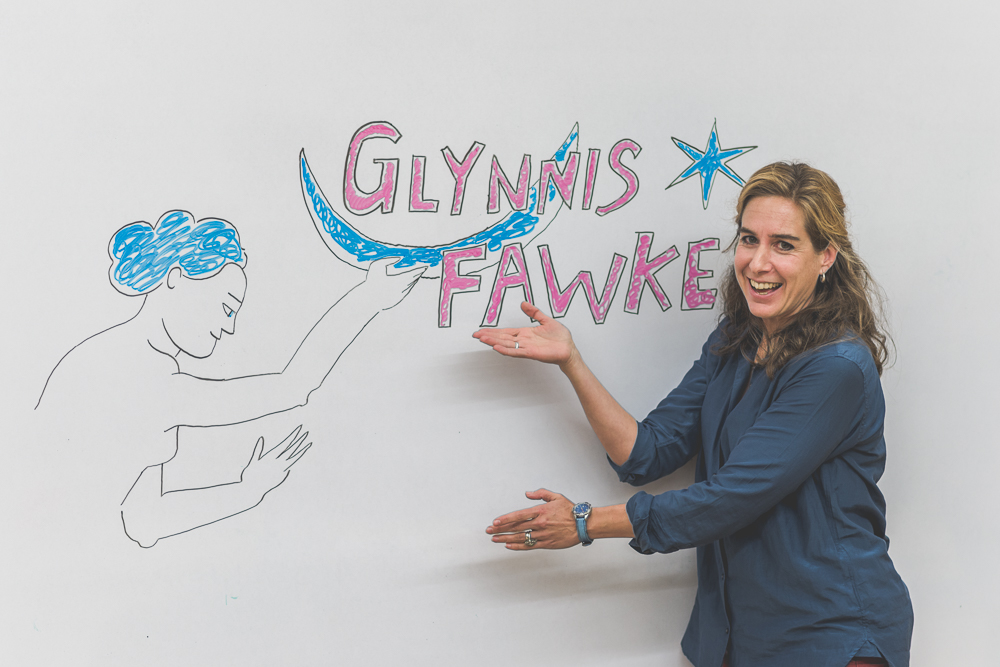
Glynnis Fawkes with her name board drawn by Luke Howard
Her stories are based on antiquity instead of memoir because she feels that once the personal story is written down, it becomes fiction. She particularly enjoys the archetypal stories that have been around and reused for so long. Greek myths use so much of the human condition: family, death, repercussions, love.
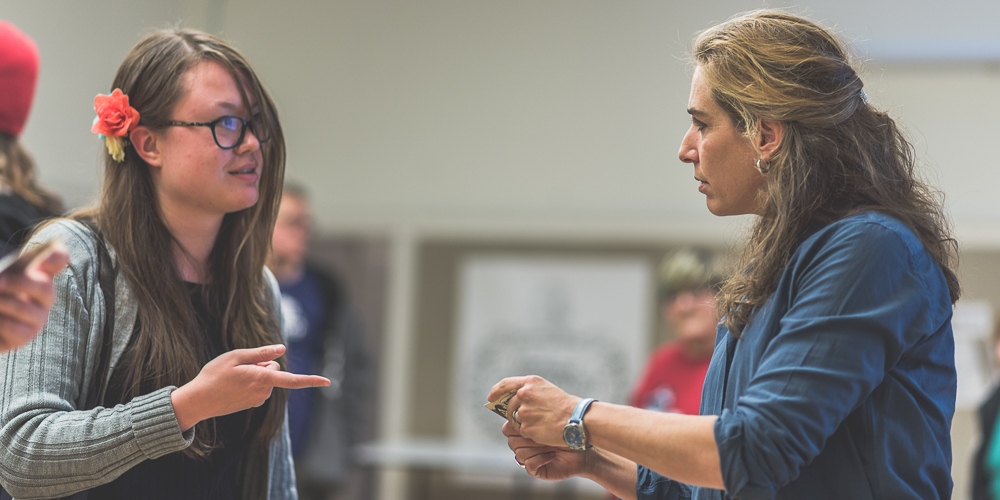
Glynnis having a discussion with Kotaline Jones (’16).
Cyprus is unique. It is hard to use their mythology because it is not well known and there are no texts that have been translated. But she learned a lot living with archaeology day in and day out. Among her peers, she would get chuckles at her archaeology jokes about pottery because they all knew the jargon. These comics are what she published in Cartoons in Cyprus.
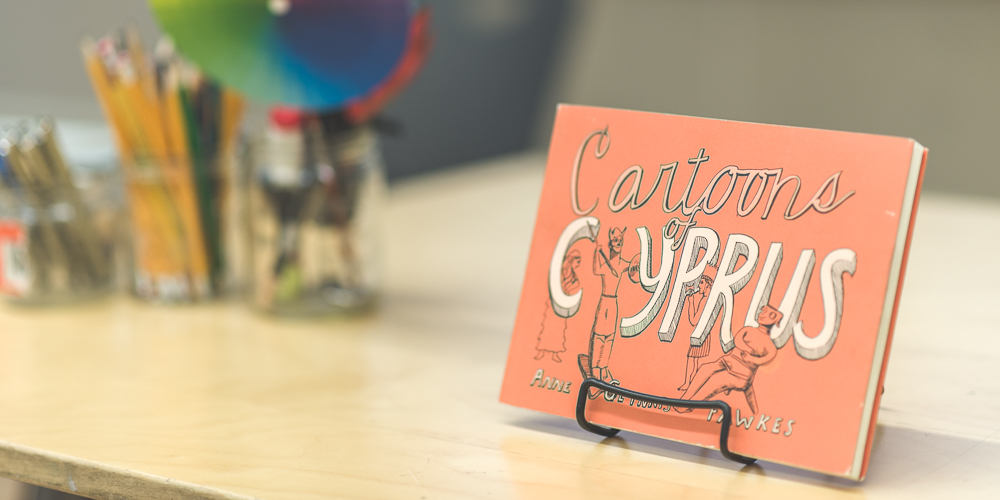
Glynnis’s book Cartoons of Cyprus.
Why does Glynnis do archaeological drawings? She enjoys the analysis, such as drawing a vase from the top view and a dissection view that shows the varying thickness. While some places can do 3D scans of the items, most places cannot afford such technology and still rely and good-old human work. Drawings also show more and involve mental analysis. Sometimes, she spends more time drawing the pot than the potter took to make it! In Crete she drew what is essentially a “Bronze-age Dixie cup” where this is almost certainly the case.
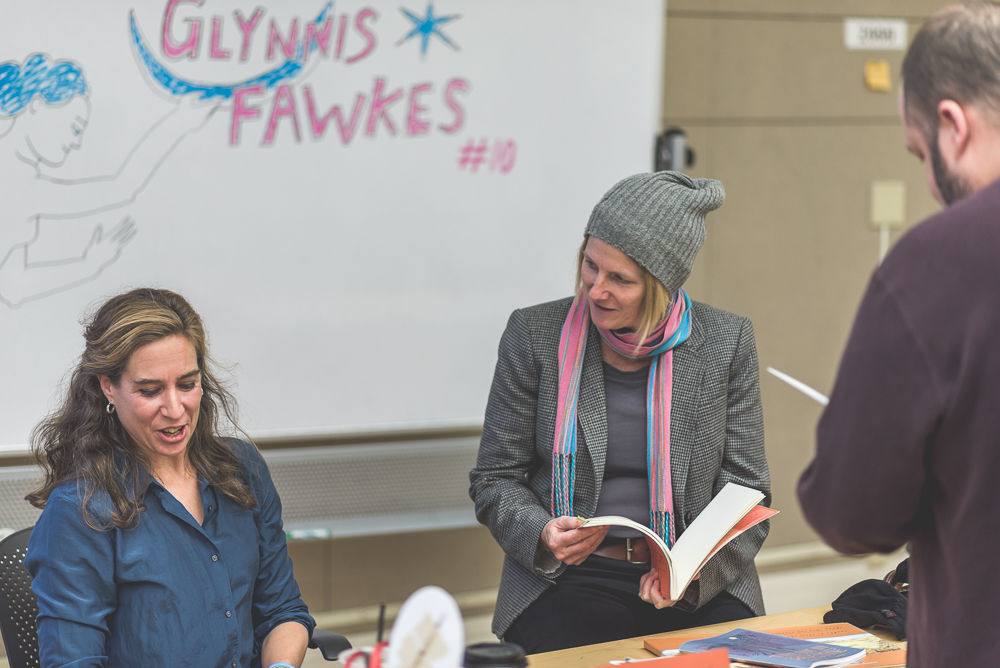
Fearless leader Michelle Ollie talking with Glynnis.
When Glynnis had kids, she was still trying to figure out what to do with her life. She did a painting of ruins with characters from the stories in the area. But how would these be relevant in Vermont? This project was too limited and too time consuming. So she made the idea into a comic. She hadn’t worked in comics before other than gag strips, so she started with baby steps using Homeric hymns.
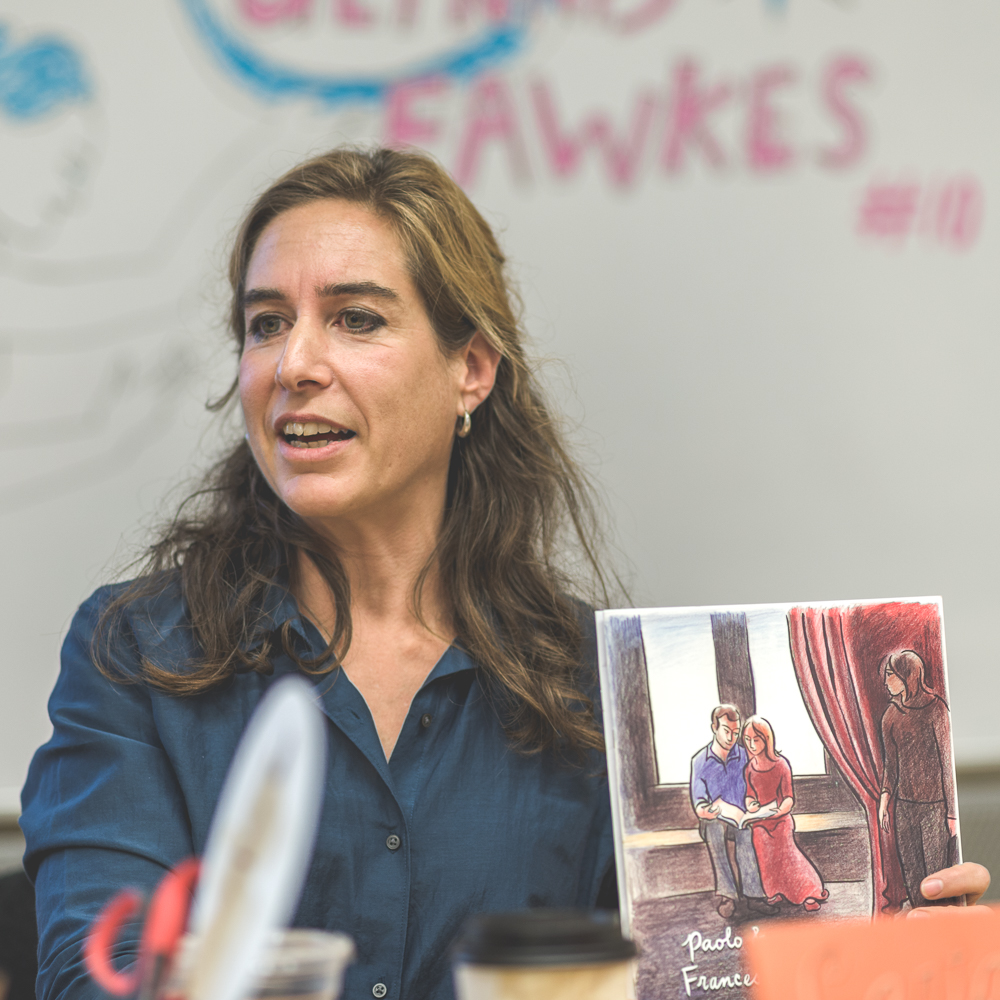
Glynnis with one of her books.
After these ancient myth comics, she moved on to comics about her own kids. In these comics, she made a self-imposed rule to use whatever the kids actually said. But she still kept making myth comics. The stories of Iphigenia, daughter of King Agamemnon, were too heavy, so she had to quit. Eventually she made The Sultan’s Daughter, which started as an artist’s book celebrating Boccaccio, an Italian writer and poet from the 14th century. The brutal story is taken from his work, Decameron. Glynnis found it hard to carry forward Boccaccio’s coy writing. Through all the rape and murder of the story, the main character never gets caught or shamed. Putting this into a visual form becomes gross, so she went very simple with her style, inspired by Peter Arno’s work in the mid-1900s.
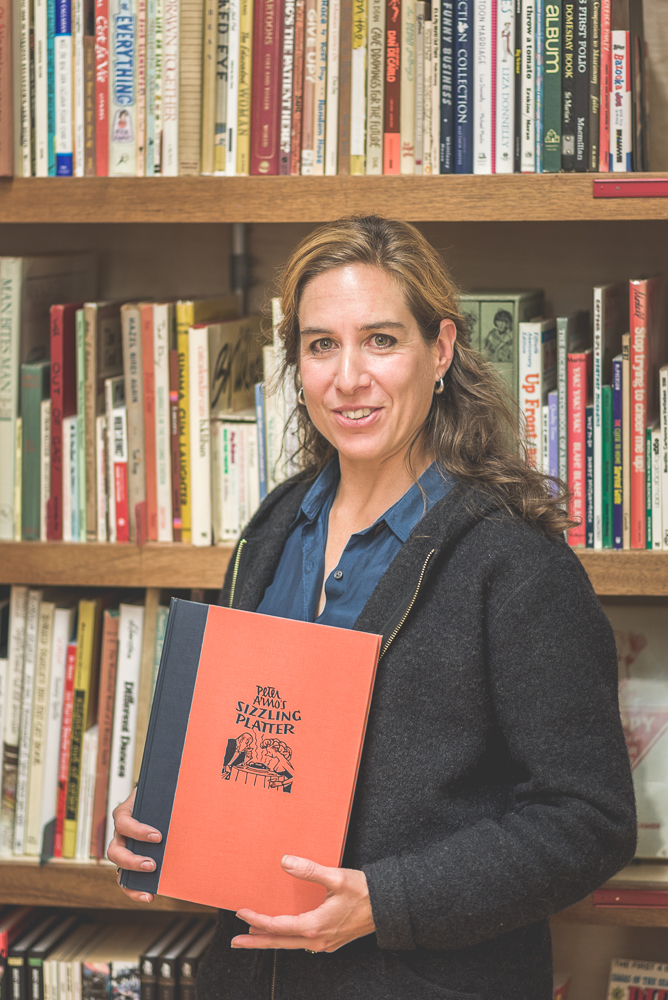
Glynnis with her favorite book in our library: Sizzling Platter by Peter Arno.
Photos courtesy Abe Olson.


One Response to Visiting Artist: Glynnis Fawkes