

 Cartoon Studies on Twitter
 Cartoon Studies on Flickr
 Get the latest news
Julie Delporte visited The Center for Cartoon Studies as a visiting artist, coming all the way from Canada! Which really isn’t that far. But she was also a fellow at CCS in 2011. She comes to comics from writing journalism, so she draws to tell something.
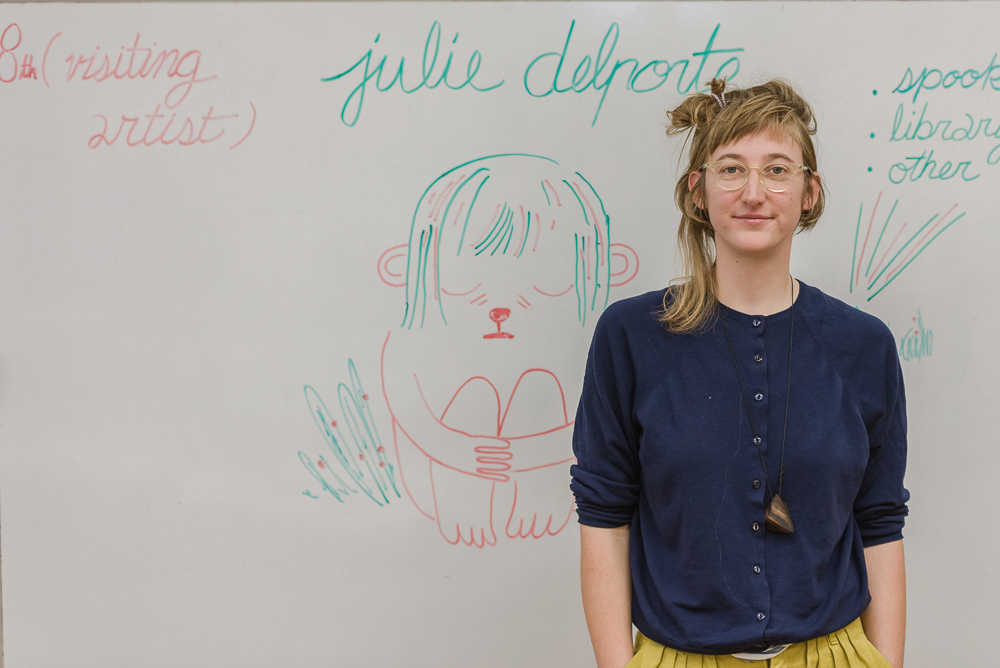
Julie Delporte with her name board, drawn by Luke Howard.
In Montreal, Julie helped start 48-hour comics, Les 48-Heures Bande Dessinee. This event has the same energy as 24-hour comics day with more sanity. The event is longer, partly, because at the end every comic is printed. There is also the benefit of actually sleeping.
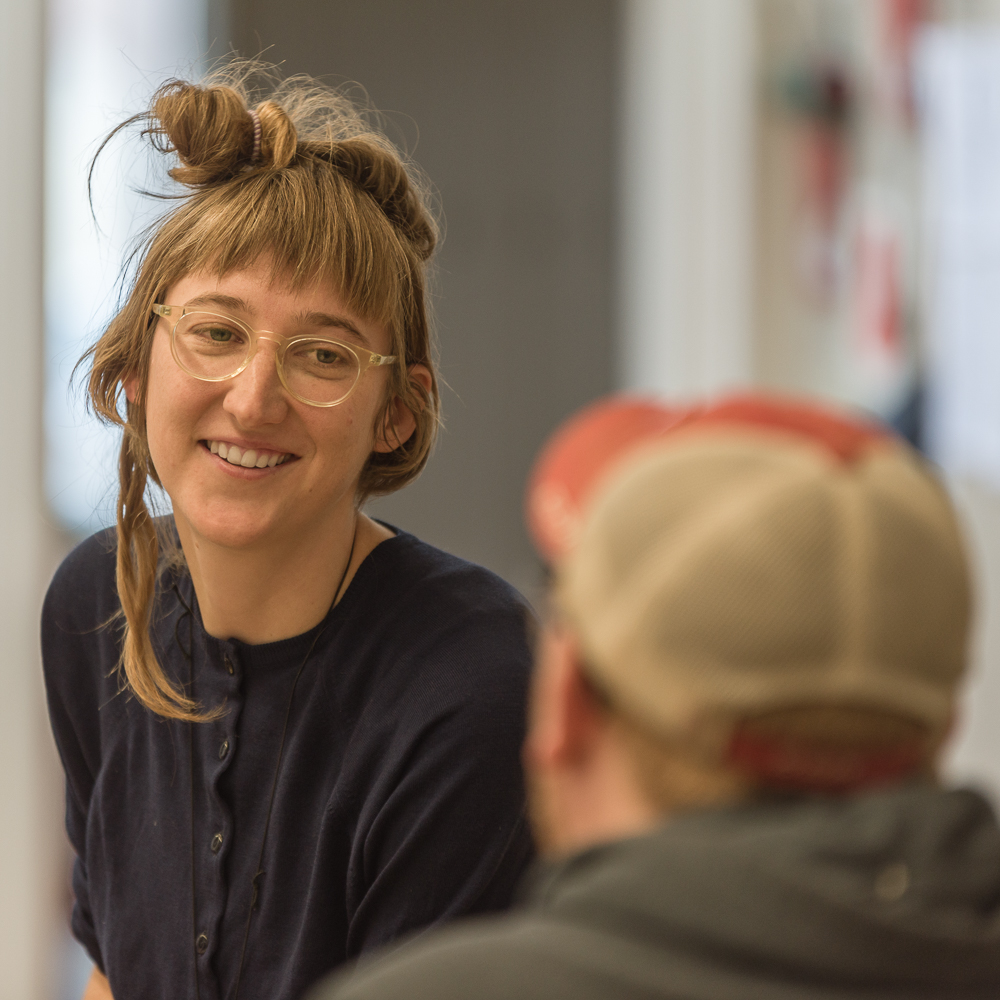
Julie, as most cartoonists are, is charmed by Luke.
Julie had started a journal prior to her arrival as the fellow at CCS. This started as 1 page per day for a month, but the routine stuck for 2 years. She extracts the main feeling from each day. She uses lots of pictures and photos for reference. Julie had posted the journal comics online at grandpapier.org. Annie Koyama saw the comics and said, “We can do a book.” However, the original comics were in French so she had to rewrite them all in English. Later, Everywhere Antenna was Julie’s first fiction story, but she still told it in the form of a diary.
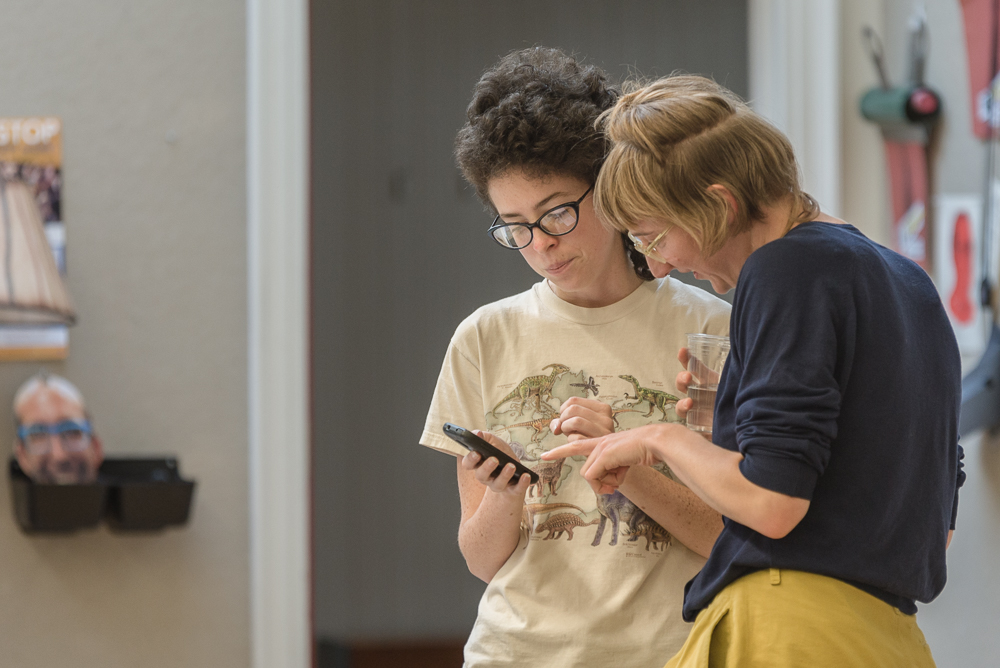
Julie looks at something on Emily Parrish‘s phone.
When making comics, Julie thinks it is good to ask one’s self why. Why are you making that comic? Are you doing what you want or doing it to earn money or be successful? Are you drawing for your self or others? Is it art you like or for the publisher or for money? From her own experience, she just draws what she wants and what will be published, will be. Trying to make something specifically to fit someone else’s idea of what should be published is much harder to actually get published and can be a waste of your precious time.
-

- Emily Sillars asking a question to Julie.
-

- Moss Bastille very interested in Julie’s talk.
-

- Shashwat Mishra might be a bit confused by Julie.
-

- Kazimir Lee Iskander definitely agrees with Julie.
In making comics, she works on the art and story at the same time. She likes to see thins happen right on the paper. She gets bored easily when she draws, so she doesn’t sketch. She just draws, and then she redraws anything that was “bad” on newspaper and tapes it to the paper—on the fly editing as it were. Julie draws almost exclusively with colored pencils. She prefers Lyra from Dick Blick. Sakura has been to fragile, breaking the “lead” inside; Faber-Castell was too dry for the effect she wanted, not giving enough texture.
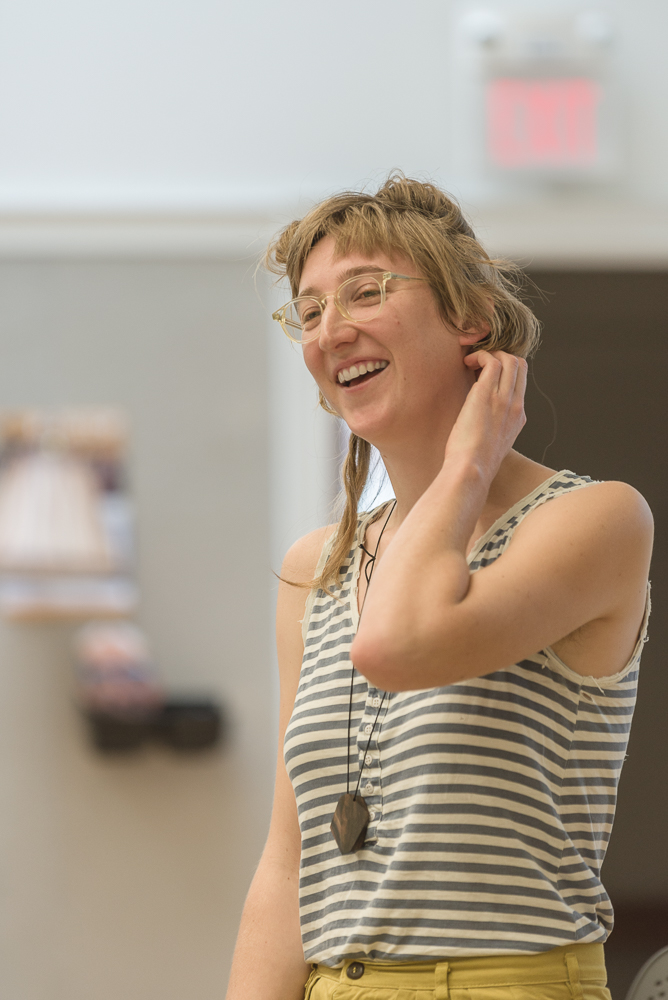
Julie had a good time here.
For reproduction, Julie needs a good scanner; a bad one won’t scan some colors. She uses levels to brighten the colors. On Journal, she made the tape more noticeable using a separate layer mask. She doesn’t do this time-consuming process any more. When printing through Koyama, she received no edits and got no help; she just sent in the files, and they were printed. But when she printed through Drawn and Quarterly, they would have scanned her originals; she wanted to do her own scanning though. But then she got a proof copy of Journal and the tape marks were gone! She contacted them, and they ended up leaving them in.
Photos courtesy of Abe Olson.

